











The Botany of Spirou Park
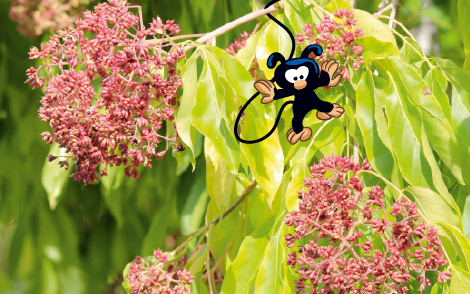
Honey Tree
Tetradium danielli
This hardy and little-known tree, native to China and Korea, grows to a height of up to 10 m when fully mature in its natural habitat and reaches a spread of 5 to 6 m. It grows quickly and bears long, glossy leaves with a velvety underside that can grow up to 40 cm long! Its extremely fragrant, cream-white flowers attract bees by the hundreds. They appear in late spring and can last until late summer in regions with a temperate climate. In late summer, it produces clusters of red fruit shaped like small capsules.
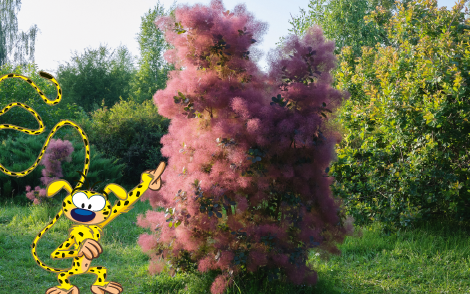
Wig Tree
Cotinus coggygria
Also known as Jupiter’s beard, this small tree—which is 3 m tall and barely 2.5 m wide—has a delicate, pink summer bloom that has earned it these highly evocative names. From a distance, the flowers look like small clouds, but you have to get closer to observe and appreciate the delicacy of this extraordinary bloom, which gives it all its charm. Its pretty, rounded leaves are apple-green at first, but darken with time. Its modest size makes it a perfect tree for small gardens and even for balconies.
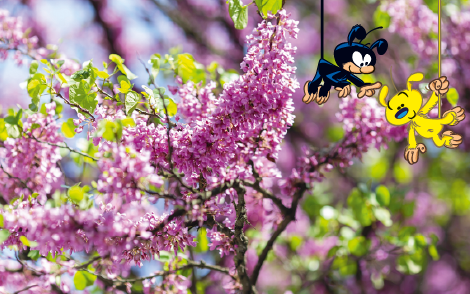
Judas Tree
Cercis siliquastrum
This beautiful tree, which blooms in the spring, grows slowly to reach a height of 8 to 10 m and a width of 5 m. Its beautiful heart-shaped foliage, which appears after the cauliflory (growing directly from the wood without a stem), which occurs in the spring and covers the bare branches and even the trunk. The flowers are purplish-pink, clustered in bouquets, and add a spectacular touch to the garden starting in April. The foliage is bluish-green and turns golden in the fall.
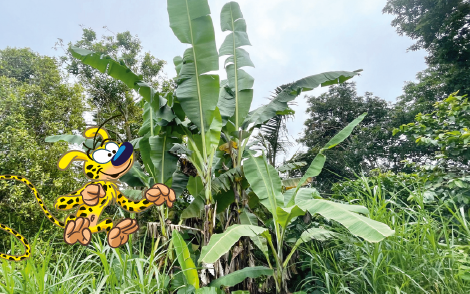
Banana Tree
Musa
The banana plant is not a fruit tree, as one might think, but a giant perennial herb native to Asia. In our climate, it is grown for the beauty of its foliage and the striking appearance of its often multiple trunks. It can grow very quickly if it thrives in its environment: from 40 cm to 1 m in the span of a single summer! It is a monocarpic plant (one that dies shortly after flowering), but its demise often goes unnoticed because it is replaced by numerous offshoots.
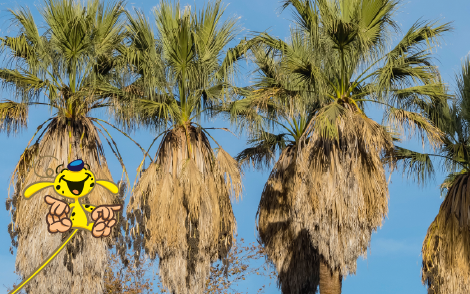
Mexican Palm
Brahea edulis
This beautiful palm tree, native to Mexico, can grow up to 12 m tall when fully grown and about 3 m wide. Its exotic appearance does not make it any less hardy; it is the palm tree that tolerates cold best—down to – 12° C, or even colder, as long as its roots remain dry in winter. It takes its time growing during the first 10 years and can grow much faster afterward. The white summer blooms appear on trees at least 20 years old, so you’ll need to be patient. Edible fruits then develop.
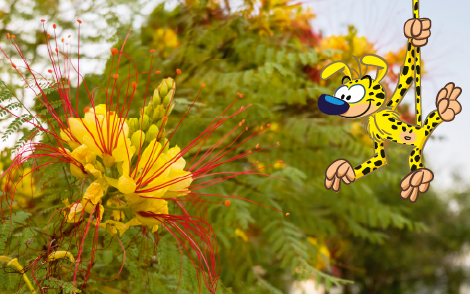
Little Flamboyant
Caesalpinia gilliesii
This shrub, with its striking flowers and incredibly exotic appearance, can reach a height of 2 meters and a width of 1.5 meters. Over time, it can take on the appearance of a small tree, forming a single trunk. Its bright yellow flowers appear in summer and feature long, saffron-red, beautifully arched stamens reminiscent of the plumage of a bird of paradise. Despite its exotic appearance, it is an airy shrub that can be planted almost anywhere, even in the Paris Basin.
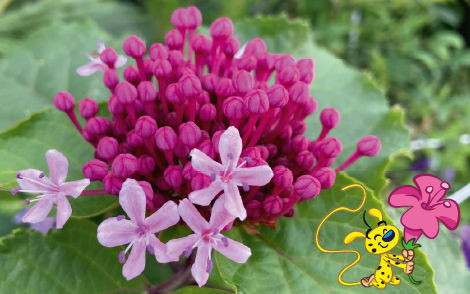
Bunge's Clerodendron
Clerodendron bungei
This deciduous shrub (whose leaves fall in winter) with upright stems can grow up to 2 m tall and 1 m wide. Despite its appearance, which is reminiscent of hydrangeas, the clerodendron belongs to the verbena family. It grows quickly and can spread over time. In late summer, it produces inflorescences (clusters of flowers) that are deliciously fragrant, dome-shaped, and raspberry-colored, attracting butterflies. The flowers are followed by highly decorative bluish-black berries.
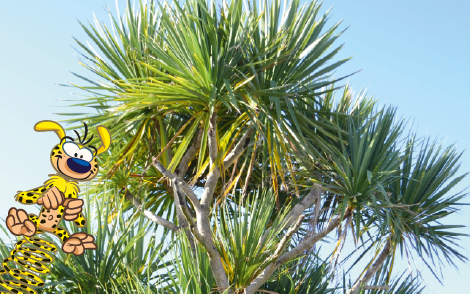
Cordyline
Cordyline australis
This shrubby plant native to New Zealand resembles a palm tree. In the wild and under ideal climatic conditions, it can develop multiple trunks topped with tufts of supple leaves resembling those of the yucca but less stiff! Once mature, the plants can bloom in the middle of summer, producing clusters of slightly fragrant, white flowers that can reach up to 1 m in length. It can be easily grown in a pot, where it will not exceed 2.50 m in height.
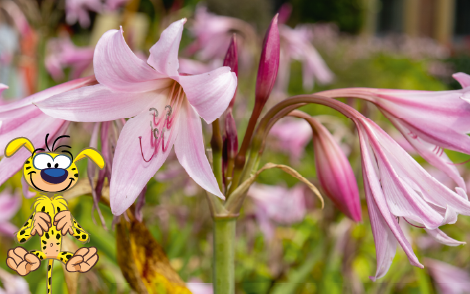
Moore's Crinoline
Crinum moorei
This perennial bulbous plant (winter-hardy) is native to South Africa. It forms a stem that can reach up to 1 m in height, topped with fragrant flowers resembling a pink lily in the height of summer. Its foliage, reminiscent of corn, usually disappears by the time it blooms. This plant does not like full sun and will thrive easily in light shade. Its bulb can withstand winter temperatures as low as –10°C.
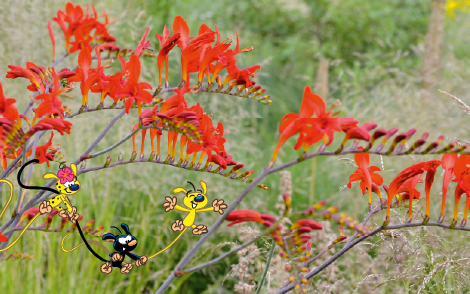
Crocosmia
Crocosmia
Crocosmia is a bulbous plant whose flower stalk can reach heights ranging from 50 cm to 1.20 m. Its brightly colored flowers, with hues ranging from yellow to red, are reminiscent of gladiolus. Yet this plant belongs to the iris family. The flower head develops at the tip of a flexible, beautifully arched stem. The plant forms a clump of lanceolate (sword-shaped) leaves, which are generally deciduous (falling in winter), but which may be evergreen in mild climates.
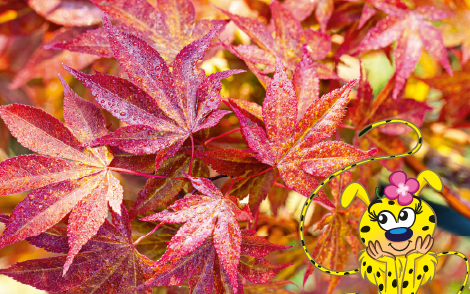
Japanese Maple
Acer palmatum
This small tree, with its obvious charm and elegant form, is very often a feature of Japanese gardens. Its palmate foliage takes on stunning orange-red hues in the fall. It can reach a height of 6 m and a width of 4 m. It prefers shady locations, but still needs some light to develop its stunning autumn colors. Keep in mind that these colors will be even more resplendent the cooler the nights are and the warmer the days are!
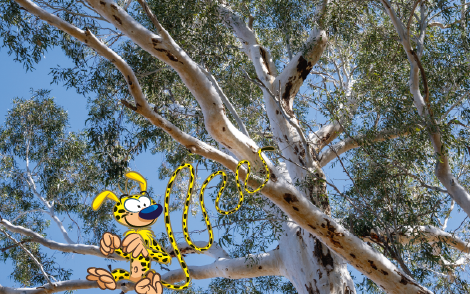
Red Gum Tree
Eucalyptus camaldulensis rostrata
In its natural habitat in Australia, this eucalyptus is a very large tree (20 m tall by 15 m wide) that grows rapidly. Its foliage, which gives off a slight scent when crumpled, is slender and bluish-green in color, and is borne on reddish stems. Its early-spring blooming is discreet but does not leave the bees indifferent. Its bark is very decorative because it peels off in white-gray, brown, or even dark red patches.
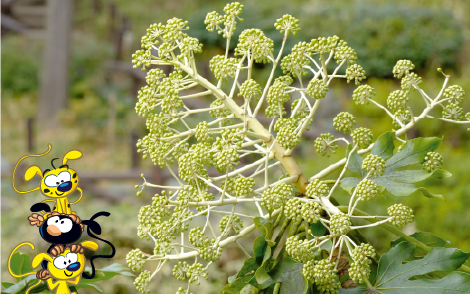
False Aralia
Fatsia japonica
The false aralia is an evergreen shrub with a bushy growth habit, bearing palmately compound leaves of an impressive size. The entire plant can grow up to 2.5 m tall and 2 m wide, and its leaves easily exceed 30 cm in width. They are attached to a petiole (stem) that is just as large. It thrives in part-shade locations and is sensitive to wind and snow, even though it easily withstands winters as cold as –10°C.
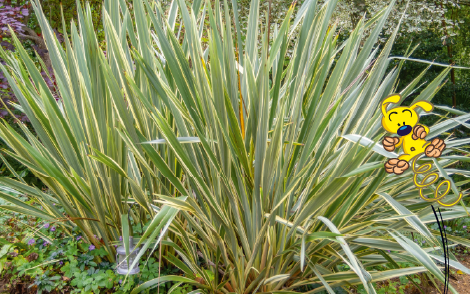
New Zealand flax
Phormium tenax
This perennial plant, native to distant lands, grows in clumps of long, pointed, bright green leaves. It can withstand low temperatures of up to -12 °C. Its upright foliage adds a lot of visual interest to the garden, and its summer blooms—red spikes that sometimes reach heights of 3 or 4 meters—are a reminder of its exotic origins. Its clump of foliage grows slowly but easily in a wide range of soil types. It can reach 2 to 3 meters in all directions.
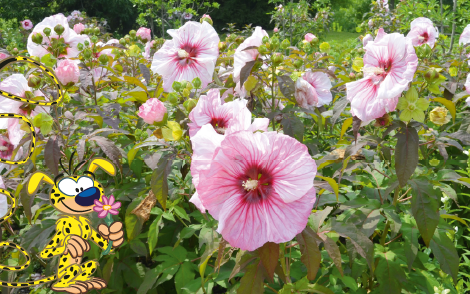
Swamp Hibiscus
Hibiscus moscheutos
The summer blooms of this hibiscus are sure to make an impression on anyone with their giant, brightly colored flowers! Growing up to 2 m tall and nearly 1 m wide, this hibiscus grows wild in the wetlands and marshes of the southeastern United States. It is a perennial plant whose rootstock is winter-hardy, but whose above-ground parts die back completely during the cold season. The serrated, long leaves (20–25 cm) are velvety on the underside.
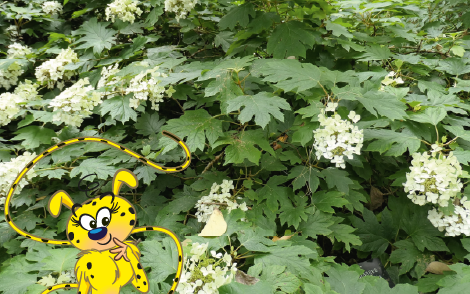
Oak-leaved hydrangea
Hydrangea quercifolia
This name comes from the Latin “quercus” meaning “oak,” and “folia,” meaning “leaf.” The oak-leaved hydrangea does indeed resemble the king of trees with its large, lobed leaves. In fall, its foliage takes on exceptional colors. Its flowers, always white, bloom from mid-June to late September. The bark of the Hydrangea quercifolia is also very distinctive because it peels off abundantly year after year. It grows to less than 2 m in all directions.
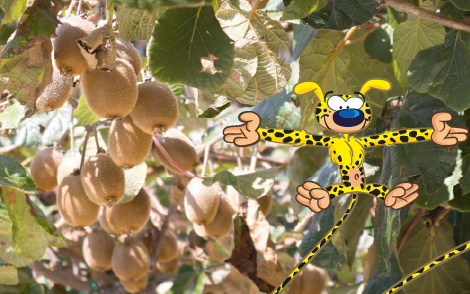
Kiwi
Actinidia chinensis
This fruit-bearing vine comprises 30 species, only 5 of which produce edible fruit. It grows vigorously, and under favorable conditions it can grow rapidly, reaching 6 m in height and 4 m in spread as it clings to its support using its tendrils. The young, reddish-barked shoots are covered with a reddish-brown fuzz. The kiwi is notably long-lived and can live between 50 and 100 years.
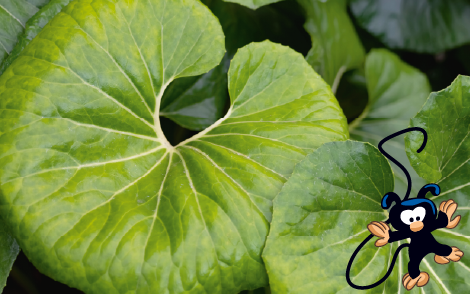
The Panther Plant
Farfugium japonicum
This perennial plant (whose rootstock is winter-hardy) is a groundcover but not invasive. Its foliage is also very decorative: the round leaves, which can reach 30 cm in diameter, are thick, glossy, with smooth, serrated, or curved edges depending on the variety, and grow on a long stem. The yellow flowers bloom in the fall between the months of October and November. The foliage is low-growing, but the flower can reach a height of 80 cm.
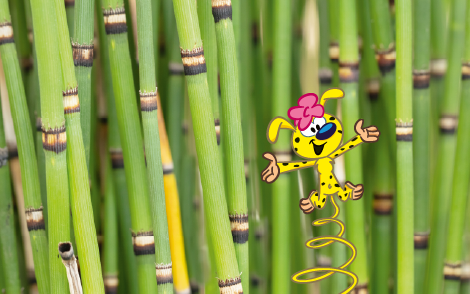
Horsetail
Equisetum japonicum
Japanese horsetail is a very striking plant often found along the edges of ponds because it likes to grow with its roots in the water. It has no leaves, and its flowers take on the appearance of a tuft at the top of its hollow stems in the spring. It can reach a height of 1 m. It survives the winter, though its above-ground parts die back, only to grow back the following spring.
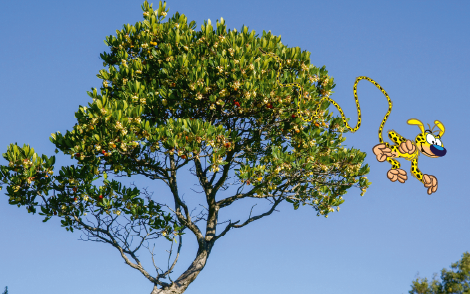
The arbutus tree
Arbutus unedo
This evergreen shrub (whose leaves do not fall in winter), which can reach 5 m when fully grown, produces fruits that have earned it the name “strawberry tree.” The fruits are pink when ripe, with skin covered in harmless prickles, and are edible. They are accompanied by a long flowering period featuring white or pinkish bell-shaped flowers that lasts from September to January. It is very common around the Mediterranean region.
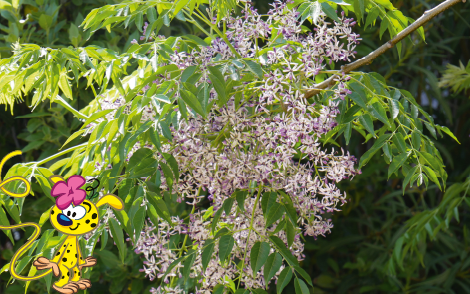
Neem
Melia azedarach
Also known as the rosary tree because of the traditional use of its naturally holed seeds, the melia charms with its delicate, fragrant blossoms (from May to July) that resemble those of the lilac. Its grayish-brown, smooth bark, which cracks lengthwise with age, reveals ochre-colored wood, while the young twigs are slightly red-tinged. It can grow up to 9 m tall with a spread of approximately 3 m.
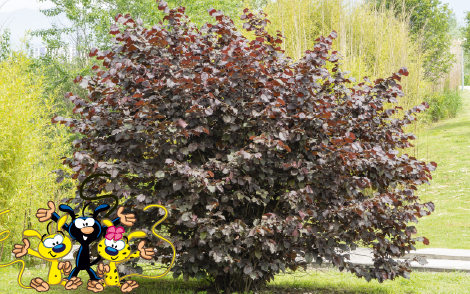
Purple Hazel
Corylus maxima ‘Purpurea’
The purple hazel is a medium-sized fruit tree that is highly prized for the color of its foliage. It can grow up to 5 m tall and 3 m wide and bears both male and female flowers on the same plant (it is said to be monoecious), which attract a large number of pollinating insects. The male flowers, which take the form of hanging catkins, appear in February, followed by the very discreet female flowers in March. The delicious fruits are harvested around the month of September.
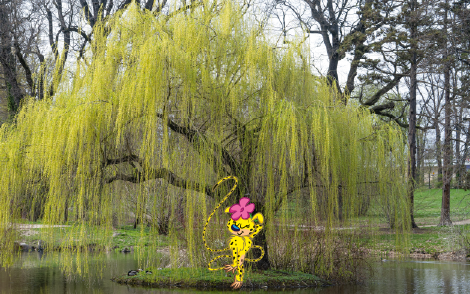
Weeping Willow
Salix babylonica
Its branches, which sometimes touch the ground, and its delicate leaves with grayish-white undersides, swaying at the slightest breeze, make it a tree that stands out from the crowd. Capable of reaching a very imposing size (up to 20 m tall) and possessing a fragility that makes its wood brittle, it is a tree that is increasingly rare in our gardens. It grows quickly, and its crown expands rapidly to form an impressive, spreading canopy.
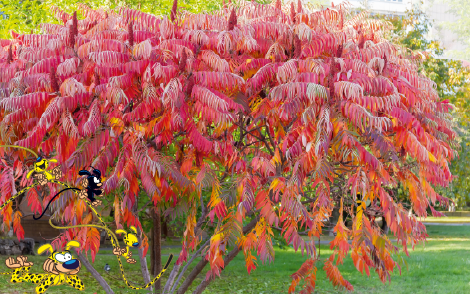
Virginia sumac
Rhus typhina
Virginia sumac is a shrub that can become invasive, forming suckers sometimes far from the parent plant. The female summer flowers give way to distinctive fruits shaped like upright, hairy cones of a deep red color. Its foliage takes on an incredibly flamboyant hue in the fall before quickly falling off. It can grow up to 5 m tall at maturity and 4 m wide. Be careful of its sap, which can cause severe skin irritation upon contact.
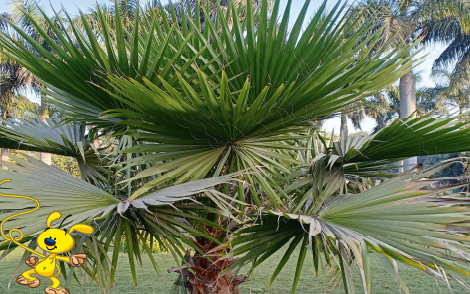
Mexican Palm
Washingtonia Robusta
This large, fast-growing palm tree, has a slender trunk topped by a crown of large, palmate, fan-shaped, almost round leaves. It is commonly found in the south of France because it cannot tolerate temperatures below –8°C. Under good conditions, it can grow to a height of 25 m, but its crown is only 3 m wide at most. Each leaf has a petiole (a stem) that is 1.5 m long!